Community Love
The Problem: 70%+ of people live in impersonal cities, that are designed for cars. Housing is a commodity quickly becoming out of reach for many.
Cities sort and segregate people spatially and by economic status (where you can afford to live). We are distanced from family members and friends, and from those perceived to be different from us. Intolerance and misunderstanding increases as inequality grows. Day-to-day life experiences vary significantly with a persons access to resources (income) and supportive relationships. The systems’ goal is limitless consumption to fuel economic growth, profit, and private wealth.
Our world is faced with an aging population and infrastructure. People and the environment are over-worked and traumatized from trying to maintain an economic and political system that no longer serves us. Barriers to participating in a commerce driven society are compounded the longer a person lives in a deprived state – socially, mentally, or physically. We now see the effects of intergenerational trauma and poverty. Oppressive structures that have been in place for hundreds of years have no place in modern day.
There are many of us who don’t want to live the high consumption, mentally/physically/environmentally toxic lifestyle that we currently have as status quo. It's time to set things right and invest in people to prevent further suffering, and allow ourselves and Mother Earth to heal. Slowing our lives down is good for the mind, body and planet as we witnessed during covid. The Earth repaired polluted water and air, and the same is true for our body and spirit. Healed people make better workers, parents, and community members - that’s why it makes sense to try something new.
We DON’T need more of the same housing; we need a COMPREHENSIVE NETWORK OF CARE, and a critical mass of people who want to know and help their neighbours. Pooled resources are the best way forward - especially for those of us at the bottom. Money is not what solves our problems, WE ARE. We need a model of housing based on cooperation, not competition.
Organizing housing en masse as CHANGE MANAGEMENT is the solution to the MENTAL HEALTH CRISIS, HOUSING CRISIS, CLIMATE CRISIS, and an act of RECONCILIATION.

The Solution: The Village or Collective Housing concept
It takes a village – so let’s build villages!
A VILLAGE defined as an explicit place of belonging where my basic needs are met. Inter-generational, inter-cultural, all ability life, where everyone is valued and lives in dignity - like it’s SUPPOSED TO BE!
We need to get back to basics, and focus on meeting peoples’ basic needs of food, shelter and belonging. We need to live in spaces designed for people not profit (or cars). Indigenous knowledge offers abounding wisdom on cultivating community life that honours all ages and stages of life, the changing seasons, and places value on finding your gifts and sharing them as the meaning of life.
The only constant is change. Collective Housing, aka The Village, is a “Change Management System” to support us as we transition into the future. A home should be a place to endure changes in people who come and go in our life, without the housing upheaval that happens during death, divorce, abuse, or abandonment. For many, those who are genetically connected to us are NOT the best people to care for us. Families are commonly separated by divorce, mental health issues, and geography (spread across the world). Community compensates for the failures of family.
HOUSING - IT IS A HUMAN RIGHT
A new non-market housing option will free up existing market housing for those who desire it. Housing as a public good allows us to achieve common goals in sustainability and to protect vulnerable populations. Secure housing from birth to death is mental health care, prevention of addiction, suicide, and trauma.
In The Village, each person contributes to meeting everyone’s basic needs and in return they receive food and housing. No financial transaction or calculation required - it is an equal trade of labour for basic needs. See Economic Structure below for the financial rationale. Ideally working 20 hours a week leaves time to care for yourself, others, and to spend time on your passions, or to earn money/other rewards. This affords people of all abilities the opportunity to be cared for, and contribute through meaningful work.
Rural and urban options are necessary. People can stay connected to existing networks in the city or remove themselves from over-stimulation for a simpler, healing environment. We could de-populate cities and make them more livable for people choosing that lifestyle, and re-populate and invigorate dying towns with existing infrastructure. CHANGE MANAGEMENT.
ECONOMIC STRUCTURE
If working a full time job (40 hours per week) SHOULD provide for your basic needs and 30% of your income is spent on housing, with 20% spent on food - then working 20 hours a week in return for food and housing equates to 50% of your income. The benefit of removing monetary exchange for food and shelter alleviates stress, calculations and mental fatigue. It frees people to contemplate more rewarding pursuits, and makes the current "gig economy" viable instead of precarious.
The built-in pool of labour in The Village subsidizes the operation and maintenance of Collective Housing system. Training people in housing construction and maintenance, in food production and distribution is secure and meaningful work. Knowing that our efforts improve life for others while providing for ourselves feels satisfying.
This system could streamline and consolidate; AISH, Welfare, Employment Insurance, numerous other government subsidies, Food Banks, and Private Disability (companies could pay into this system instead of private health care services) - the savings in bureaucracy alone would be a WINDFALL. It would ensure that people don't fall through the cracks.
.
FRESH FOOD IS HEALTH CARE
Our busy, lonely and inequitable lives contribute to poor eating habits; eating our feelings, eating fast food due to busy schedules, and whatever food is cheapest. As a single parent, I can attest that although I value fresh food, I often did not have the capacity to cook for my children after a day of University classes, and before I studied, did part time work or shuttled my kids to extracurriculars. It is redundant for each household to prepare 3 meals a day, and many people cannot afford the food or the time. Eating together as a family or community has social value and is an opportunity to nourish our souls as well as our bodies. We need to empower people in making healthy choices that will benefit the collective through reduced health care costs.
Calgarian Lourdes Juan created the Leftovers Foundation to divert food that would otherwise be wasted or thrown out. She states that 40% of the food we produce is wasted. By collectively producing and distributing fresh food to everyone through community food hubs in The Village, we would improve physical health and reduce food waste. Fast food workers become fresh food workers in The Village. Investing in fresh food will save money long-term by preventing diet related diseases such as cancer, heart disease, and diabetes.
TRANSPORTATION IN THE VILLAGE
Equity deserving citizens such as the elderly, children, and the disabled are less likely to operate a personal vehicle. It is socially and environmentally beneficial to prioritize people NOT cars in community design. Limiting roads means better use of land, less costly infrastructure, and reduces the urban “heat island” effect. Importantly, children and the elderly are free to walk and play without roadways as barriers, or threat of serious injury. Currently we encourage people to give up their cars but they are still constantly inconvenienced by an environment that is built for cars?! I want a world that is conducive to the needs of my 93 year old Grandmother and my autistic nephew.
Roads will provide access for distribution and emergency crew access but not for personal convenience. Parking can be centralized or underground, resulting in large tracts of land for pedestrians to roam and enjoy. Public transportation via bus or train connects hubs to one another, and to other cities and settlements. An option for personal convenience is a chauffeured fleet of publicly owned cars. Chauffeuring would limit land needed for parking at the destination or a personal residence as the car continues onto its next trip.
SOCIAL BENEFITS
After covid, we are well aware of the results of isolation and loneliness on people. Loneliness harms us because we are social creatures designed to live in cooperation with others. This creates mental and physical health issues, and prevents us from fulfilling our potential.
Intergenerational knowledge is being lost due to seniors being segregated in care facilities or neglected in their isolating single family homes by families that are too busy and financially burdened to make time to visit. Elders are supposed to be with the kids - that's what keeps them young - and its what makes the kids wise!
I support the formation of self-selected housing units where individuals and families choose the group of people they occupy space and share chores with. This allows people of shared culture, language and experience to provide direct support and comfort for one another. This is not to discount the value of housing units with diverse members, there is a need for both. I have ideas about how to facilitate the self-selection process on a large scale but they aren't mentioned here.
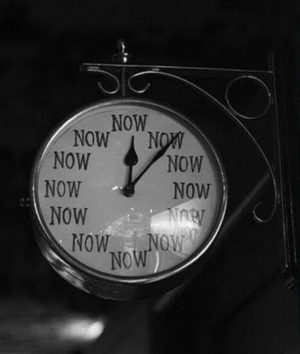
Emotional regulation is the ability to exert control over one’s own emotional state. It may involve behaviors such as rethinking a challenging situation to reduce anger or anxiety, hiding visible signs of sadness or fear, or focusing on reasons to feel happy or calm (Psychology Today). This is a big reason that we need to live in community again, to have role models outside of our families who make us feel accepted and cared for in all our imperfect human messiness. Emotional regulation can be modelled and learned without explicit instruction, just by being around people who are calm, happy, and supportive.
Too many people feel alone in their struggle. They feel a need to present themselves in an unauthentic way in order to avoid judgement, and be accepted or loved. We all need to understand that MOST OF US ARE NOT OKAY after covid, the hostile political division in the world, and the effects of inequality on our self-esteem and sense of security. We need to rely on people by choice, not to meet our basic needs. We need a place to “just be”.
COLLECTIVE HOUSING AS RECONCILIATION
Indigenous cultures hold the wisdom to guide us in sustainable living and appreciation for our differences as people. Collective Housing is an opportunity for governments to ACT on their reconciliation commitments. All levels of government could provide land and empower indigenous peoples to direct a socially sustainable lifestyle that they have lived since time immemorial.
SOCIAL HOUSING
Austria is an example of the benefits of wide-spread social housing that originated after World War I. Multifamily housing with amenities such as swimming pools, childcare, and fabulous architecture are incorporated into this social good which reduces the stigma we see with Western social housing projects. In the best cases the housing design and layout is informed by its residents.
Their housing market fared better during the 2008 Financial Crisis and political candidates are not guaranteed specific territories because people of varying economic classes reside amongst one another.
COHOUSING
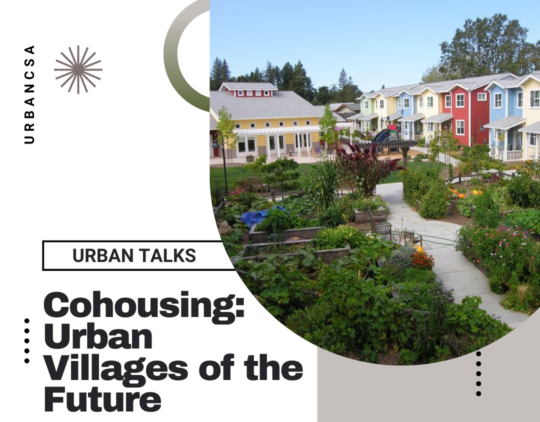
Cohousing from Denmark informs my vision for the Village. Cohousing is a lifestyle where a community of people care for the shared property and one another. This requires the individual member to serve the collective in a duty from finance to food prep, and in return they don’t feel our current dilemma of having to “do it all”. Informal connections and close proximity take the burden out of seeking help when you need it.
Social interaction beyond your duty is optional, and up to the individual on how much they want to engage. You have a complete home of your own including a kitchen, and you have access to the common area with kitchen/dining/gathering spaces that may include shared workshops, gyms, gardens, or whatever is desired.
You & I are Creator’s gift to the Earth, let's ACT LIKE IT!
Last Updated on August 29, 2023